Difference Between Supermirror N8, Polished N7, and Mechanical Polished Stainless Steel
What is Supermirror N8 stainless steel and what are its characteristics?
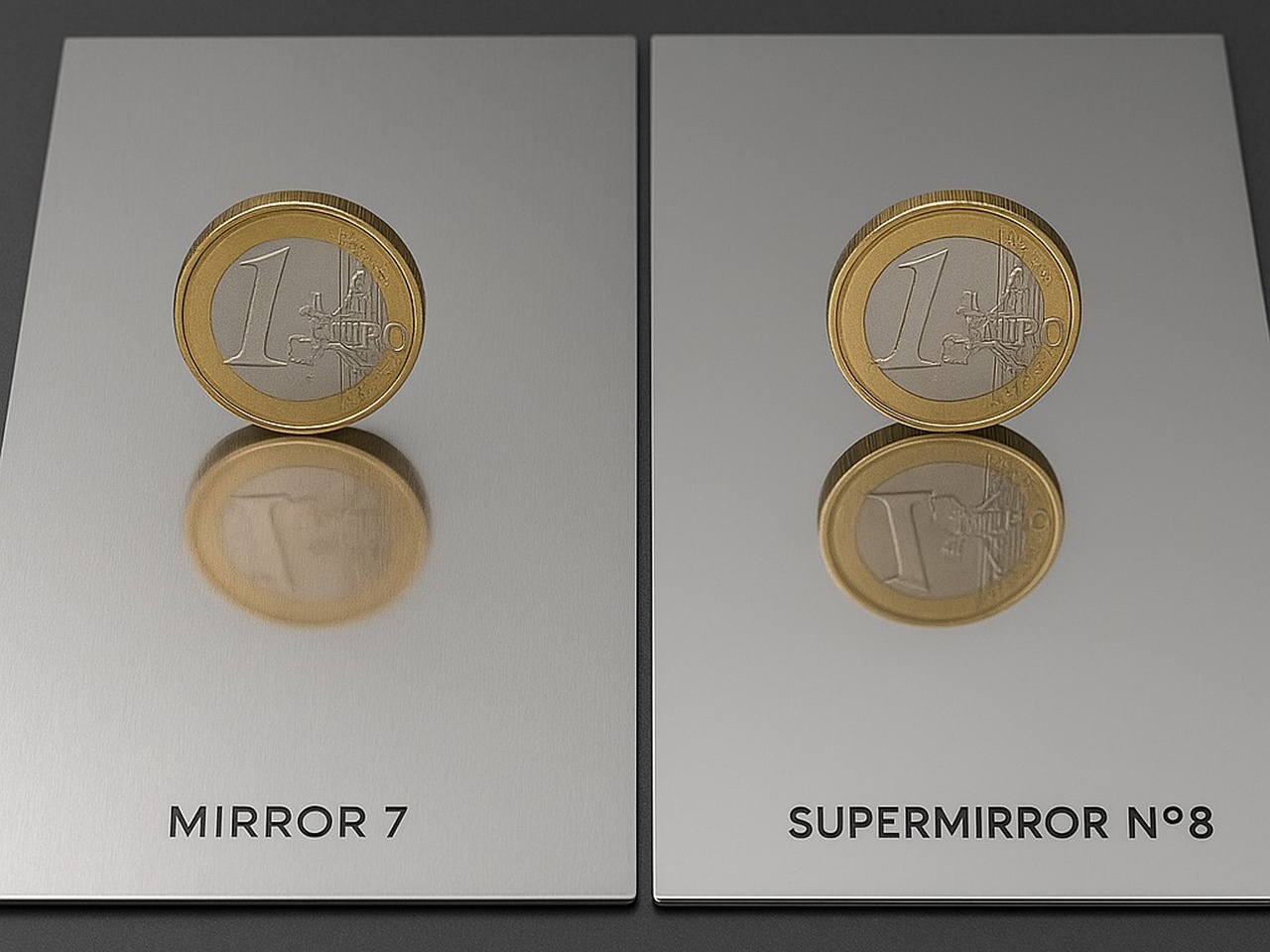
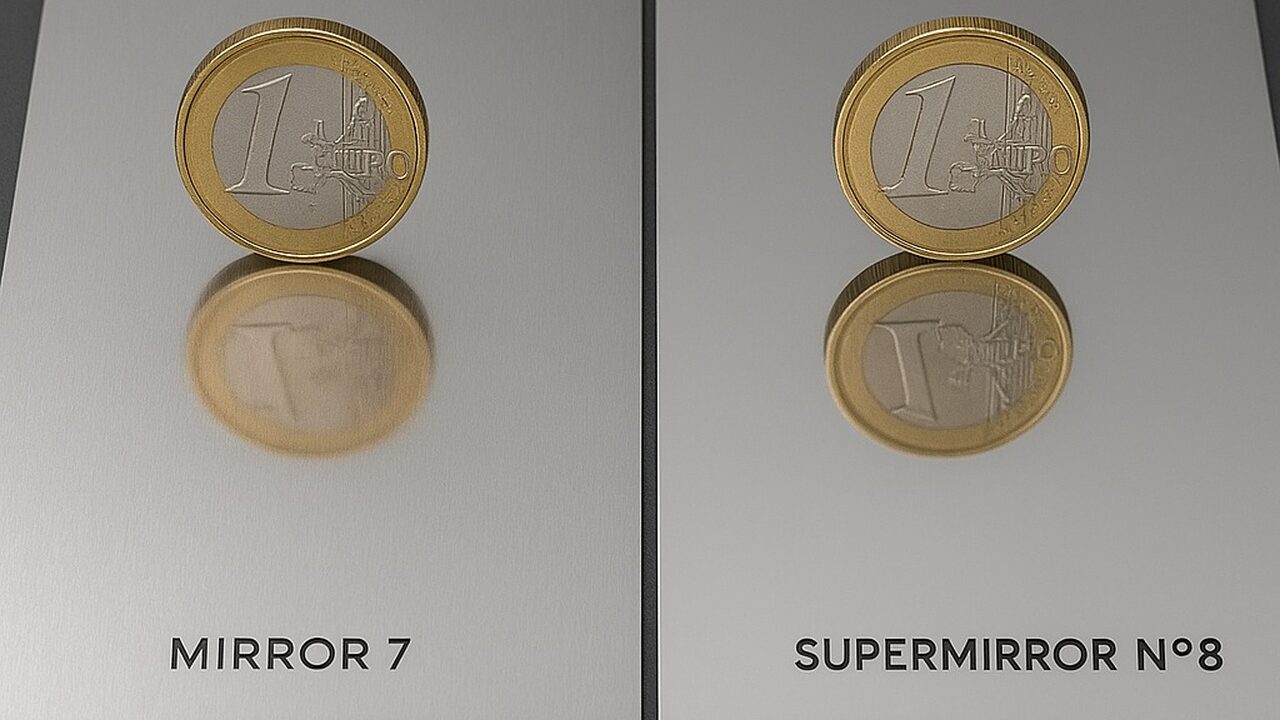
Supermirror N8, also known as Supermirror K8 stainless steel, inox supermirror 8K, or simply supermirror 8, is the most prestigious mirror-polished stainless steel finish. It is achieved through a wet mechanical polishing process that reduces the roughness (Ra) of the base material to such a low level that most surface defects are deleted, resulting in maximum achievable reflectivity—without visual distortion and with a brilliance comparable to that of a true glass mirror.
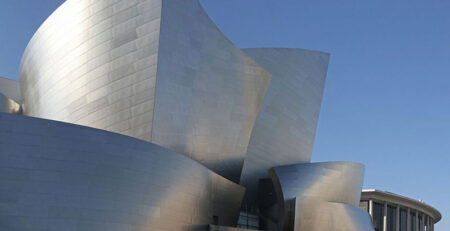
Thanks to these properties, Supermirror N8 stainless steel is particularly valued in industries where aesthetics and visual impact are crucial, such as contemporary architecture, interior and exterior design, luxury yachting, shower heads, and high-end components. This finish can be produced in very thin thicknesses (as low as 0.5 mm) up to 7.0mm thickness.
The standard dimensions typically available from MTS-Metalspeciali are 1000x2000, 1250x2500, 1250x3000, and 1500x3000mm, but custom sizes up to 2000x6000 mm can be supplied upon request.
What is Supermirror N8 stainless steel and what are its characteristics?
Polished N7 stainless steel represents an intermediate finish, mainly obtained through fine-grain mechanical polishing,, without reaching the maximum reflectivity of Supermirror N8. The N7 surface is very bright but retains a slightly visible grain under certain lighting conditions, along with subtle non-directional “scratches,” which are almost imperceptible.
It is often referred to as super-polished stainless steel, ideal for those seeking an excellent balance between aesthetics and cost-effectiveness. It is used in architectural applications, interior and exterior cladding, and in the nautical sector where good corrosion resistance and elegant appearance are required.
Available in standard commercial dimensions or custom sizes upon request.
What does mechanical polished stainless steel mean, and where is it most commonly used?
Mechanical polished stainless steel is a secondary process applied to materials, usually with an initial BA or 2B finish, that require surface improvement.
Mechanical polished finishes are useful when a product needs reworking after a process such as cutting, bending, welding or simply when an improved shine is desired for aesthetic reasons without requiring a perfect result.
Polished stainless steel will never achieve the optical perfection of Mirror N8, but it still ensures a uniform and reflective surface with slight non-directional scratches resulting from the intrinsic production process. It is widely used in stainless steel cutting company, furniture components, and cladding applications where appearance matters but is not as critical as in luxury design.
A unique feature of this finish is that it can be applied to very thick materials, even up to 20 mm.
What are the aesthetic and functional differences between the three finishes?
| Finish | Polishing Method | Brightness / Reflectivity | Typical Applications |
| Supermirror N8 | Wet mechanical or electropolishing | Maximum brightness and reflectivity | High-end architecture, luxury yachts, high-end design, components, coffee machines, elevator cabins, automotive |
| Mirror N7 | Semi-wet mechanical | High brightness, excellent reflectivity – presence of imperceptible non-directional scratches | Interior/exterior cladding, furniture, marine applications, etc. |
| Mechanical polished | Mechanical | Good reflectivity, moderate brightness, visible surface marks | Metal carpentry, furniture, functional cladding |
The comparison shows that Supermirror N°8 is the ultimate choice for perfection in appearance, reflectivity, and image clarity, while Polished N°7 offers an excellent compromise between aesthetics and cost. Mechanical polished stainless steel, on the other hand, is a practical and economical solution for applications that do not require extreme attention to visual appearance.
How to choose the right finish for architecture, marine, and design applications?
The choice between Supermirror N°8 , Polished N°7, and Mechanical polished stainless steel depends on the project and the required finish level:
- Architecture and premium cladding: choose Supermirror N8, which provides an irreproachable visual result, perfect for facades, lobbies, elevator cabins, coffee machines, shower heads, and luxury interiors.
- Marine applications: both N7 and N8 stainless steels are ideal for luxury yachts, handrails, aesthetic details, and marine-resistant cladding.
- Interior design and furniture : Polished N7 stainless steel is an excellent option for furniture, decorative elements, and surfaces.
- Carpentry and functional applications: Mechanical polished stainless steel helps reduce costs while maintaining a good visual shine.
Mechanical and chemical polishing process
The polishing process varies significantly depending on the desired finish:
- N8 finish: undergoes several wet polishing stages with specific procedures to achieve the desired result. The latest Supermirror K10 machines, like those owned by MTS-Metalspeciali, are technologically advanced and fully automated. The MTS Supermirror line achieves the highest brightness and reflectivity without chemical agents surpassing even N8 quality, known as K10 (produced exclusively by MTS-Metalspeciali). Supermirror K10 stainless steel ,achieves perfect image reflection, free of distortions and with minimal imperfections.
- N7 finish: involves semi-wet polishing processes that produce high gloss but lower reflectivity than Supermirror 8, with slight granularity or imperceptible surface marks.
- Mechanical polish finish: achieved using industrial brushes combined with abrasive compounds that produce moderate brightness and low reflectivity, leaving some visible surface scratches.
Surface reflectivity and brightness
In case of the Supermirror N8 finish, the reflectivity and brightness achieved through the specific machinery give to the material a surface equivalent to a mirror glass.
The Polished N7 finish, unlike Supermirror N°8, achieves good brightness but lower-quality reflectivity.
Finally, the mechanical polished finish—designed for carpentry or non-luxury aesthetic uses—offers respectable shine from abrasive compounds but with a slightly hazy reflection.
Typical applications: construction, marine, interior-exterior design, general contractor
- Construction: facades, elevators, cladding.
- Marine: aesthetic details, surfaces exposed to salt air.
- Design: tables, furniture elements, metal sculptures, shower heads, coffee machines.
Discover our mirror-polished stainless steel products. Contact – Request a Quote and Consultation page.